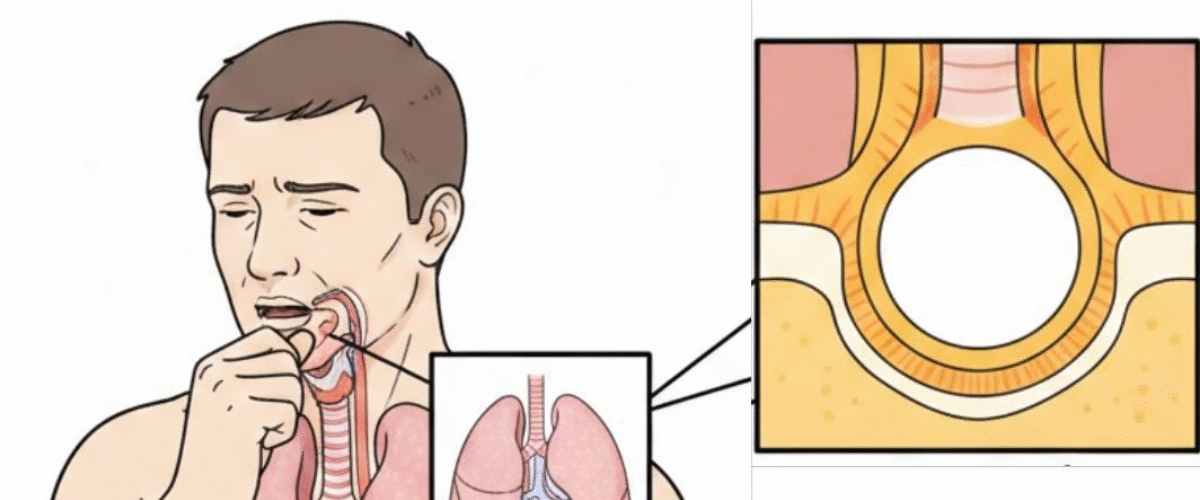
Übermäßiger Schleim im Hals ist lästig und führt oft zu ständigem Räuspern. Man hat ständig das Gefühl, etwas stecke im Hals fest. Eine Infektion der oberen Atemwege kann die Ursache sein, aber auch Allergien, Asthma und Sodbrennen können dieses Gefühl hervorrufen.
Manchmal reicht Husten allein nicht aus, um Schleim im Hals zu lösen. Wenn Sie ständig viel Schleim im Hals haben, sollten Sie die Ursache dafür abklären und behandeln. Ist der übermäßige Schleim durch Reizstoffe oder Allergien bedingt, kann das Vermeiden dieser Auslöser helfen, die Schleimmenge im Hals zu reduzieren. Bei Verdauungsstörungen oder Infektionen, die zu Schleimansammlungen führen, können Hausmittel wie Natron, Honig, Ingwer oder Dampfinhalation helfen, den Schleim zu lösen und den Hals zu befreien.
Lesen Sie weiter, um mehr über die verschiedenen Ursachen für ständigen Schleim im Hals zu erfahren. Am Ende des Artikels finden Sie Informationen zu vielen wirksamen Hausmitteln gegen Halsschmerzen.
Ursachen für übermäßige Schleimbildung im Rachen
Unser Körper produziert Schleim, um Infektionen durch Bakterien und Viren abzuwehren. Schleim im Rachen ist völlig normal. Laut Dr. Melinda Ratini auf WebMD produziert allein unsere Nase täglich etwa einen Liter Schleim.<sup> 1</sup> Dieser läuft normalerweise unbemerkt den Rachen hinunter. Probleme entstehen, wenn der Schleim dickflüssiger und auffälliger wird oder wenn zu viel Schleim produziert wird, der eine ungewöhnliche Farbe wie Dunkelgelb, Grün oder Braun aufweist.
Postnasales Tropfen
Eine Schleimansammlung im Rachen wird oft als postnasales Tropfen oder postnasales Sekret bezeichnet. Die Amerikanische Akademie für Hals-Nasen-Ohrenheilkunde erklärt, dass übermäßige , dünnflüssige Schleimsekretionen, verursacht durch Reizungen, Erkältungen, Allergien oder hormonelle Veränderungen, zu vermehrtem Schleimfluss in den Rachen führen können . Auch Nasennebenhöhlenentzündungen und Trockenheit im Rachen können eine zähe Schleimansammlung verursachen.²
Dieser ständige Schleimfluss im Rachen kann Reizungen, Schwellungen und Unbehagen verursachen. Er kann auch das Gefühl hervorrufen, ständig etwas im Hals stecken zu haben.
Sodbrennen / Säurereflux
Eine häufige Ursache für anhaltenden Schleim im Hals ist Sodbrennen. Der überschüssige Schleim entsteht, weil Magensäure in die Speiseröhre zurückfließt und die Schleimhaut der oberen Atemwege reizt. Dies wird auch als Säurereflux bezeichnet. Sie können außerdem einen bitteren Geschmack im Mund oder ein Brennen in der Brust verspüren.
According to Dr. Jennifer Robinson on WebMD, you could experience reflux without the other symptoms of heartburn. This condition is called laryngopharyngeal reflux, or silent reflux. The mucus forms when the stomach acid irritates the back or your throat and nasal airways and causes irritation and inflammation. This causes excessive throat clearing, a persistent cough, and a feeling of a lump in your throat.3
Allergies
Allergies can cause irritation at the back of the throat which can cause more mucus to be produced. Allergies are the body’s immune response to allergens and are most commonly caused by pollen in the air (seasonal allergies) or dust mites, animal dander, or mold (perennial allergies).
The Asthma and Allergy Foundation of America reports that one of the symptoms of an allergic reaction is mucus in the throat. This will usually be accompanied with sneezing, itchy eyes, and a runny nose.4
It’s important to try and remove the source of the allergy by vacuuming your home regularly and keeping bedding clean. Also, try to avoid touching your nose or eyes to prevent allergic reactions in your upper respiratory system.
You could also try one of my natural antihistamines which help to fight allergic reactions.
Asthma
Constant mucus in the throat is often experienced by people who suffer from asthma. Asthma causes inflammation in the bronchial tube and stimulates more production of mucus.
Although asthma is usually associated with wheezing and frequent coughing, the Food and Drug Association (FDA) says that mild and severe asthma results in an “excessive production of mucus.”5 This can build up in the throat and cause allergy-like symptoms.
A study published in The New England Journal of Medicine found that chronic throat clearing could be an indication of asthma in children.6
Infections
Various infections of the upper airways and throat can lead to excessive throat mucus that is hard to get rid of. When bacteria or viruses cause infection, the body produces more mucus to trap and destroy the germs. This can cause chronic coughing, clearing of the throat, and sneezing.
Sinusitis is an infection that causes the sinuses to become inflamed, swollen and filled with mucus. Among other symptoms, sinusitis can cause postnasal drip with thick, dark-colored mucus or phlegm.7
The American Academy of Otolaryngology says that a strep throat caused by a bacterial infection can cause excess mucus in the throat which drains down the throat.8
Laryngitis is an infection of your voice box which causes inflammation, irritation, and swelling. This cause excess mucus to form in the throat and give a constant urge to clear your throat.9
Smoking
Smoking causes irritation in a person’s lungs which results in black or brown mucus in the throat and airways that won’t go away. This causes smokers to constantly cough, often referred to as a “smoker’s cough.”
The University of Pittsburg Medical Center says that in addition to excess mucus, smoking causes the mucus to become thicker. Smoking also damages the lungs’ clearing system and it can become more difficult to get rid of the thick mucus in the airways.
Smoking also puts you at risk for developing a number of other health problems like cancer, infections, pneumonia, and emphysema. To help kick the smoking habit, read my article on 5 scientifically proven natural ways to quit smoking.
Certain foods
Some foods can cause mucus to become thicker and make you want to clear your throat more frequently.
According to researchers in the United States, it is a myth that dairy products generally cause excess mucus to form in the body.10 However, the Mayo Clinic says that dairy products do make mucus much thicker and harder to get rid of.11
Also, some people who are lactose intolerant may find that consuming dairy products cause them to have too much phlegm in their throat.
Pregnancy
Hormonal changes during pregnancy can increase mucus production and cause excess thin secretions to drip down the back of the throat.2
Breathing in toxins
Certain chemicals can irritate your nasal passages and throat and increase mucus buildup in your throat. They can also cause various respiratory problems, including burning sensation in the mouth, coughing, headaches and yellow or green mucus.
Dr. William Blahd on WebMD says that breathing in toxic chemicals can cause serious damage to your body and internal organs and can even be life-threatening. He advises calling a doctor as soon as possible if you have been exposed to toxic fumes or chemicals.12
Home Remedies To Get Rid of Throat Mucus
There are many effective home remedies to help clear mucus from the throat. These natural treatments can provide symptomatic relief and in some cases, treat the underlying reason for excess throat mucus.
Salt water gargle
Gargling with salt water is a simple home remedy which can help to kill mucus-causing infections in your throat and upper airways.
Researchers have discovered that even just gargling with water was enough to prevent upper respiratory tract infection.13
Adding the antibacterial properties of salt to a water gargle will help to effectively loosen phlegm and clear it from your throat quicker. All you have to do is dissolve 1/2 to 1 tsp. salt in an 8 oz. glass of warm water. Gargle several times a day with the salt remedy to get rid of throat mucus.
Gargling with salt water is just one of my natural treatment to cure tonsillitis.
Steam inhalation
An excellent home remedy to loosen throat mucus and clear your nasal passage is steam inhalation. The benefits of using steam to get rid of too much mucus in the throat can be boosted by adding essential oils that reduce inflammation, kill germs, and relieve congestion.
For example, tea tree oil has antimicrobial compounds that can help treat throat and upper respiratory tract infections.14 Also menthol oil is well-known for its ability to relieve congestion and treat the symptoms of sinus infections and asthma.15
All you need to do is add a few drops of tea tree oil or menthol oil to a large bowl of boiling water. Place you head over the bowl and cover your head with a towel. Breathe deeply for 10 minutes to allow the steam and essential oils clear your airways and get rid of mucus. Repeat the steam inhalation 2-3 times a day until your symptoms clear and you no longer have any infection in your airways.
Ginger
Ginger is another home remedy to help clear excessive mucus from your throat and suppress chronic coughing. Ginger contains antiviral properties that can get rid of infections in the respiratory tract and therefore clear thick, hard to get rid of phlegm.
A study published in the Journal of Ethnopharmacology showed that hot ginger tea is effective in treating viral respiratory infections. The antiviral effect of ginger is due to enzymes which attack viruses and inhibit their spread.16
It’s very easy to make ginger tea to get rid of mucus in your throat. Chop 1-inch piece of raw fresh ginger and put it in a cup of boiling water. Cover the cup and let the ginger infuse for a few minutes. Drink the ginger tea 2-3 times a day to help reduce the buildup of mucus and speed up the healing process of upper chest infections.
You can also find on this website a home recipe to make an even more potent anti-inflammatory tea using turmeric and ginger.
Horseradish is another therapeutic root that you can use to clear up symptoms of sinus infections and colds. To find out more, please read my article on how to use horseradish to clear up congestion.
Eat chilies
Eating chilies or spicy food is a surprising way to naturally relieve inflammation in the nose that causes too much mucus to form. Chilies contain a spicy compound called capsaicin which has antioxidant and decongestant properties. Capsaicin can also help to thin mucus and make it easier to get rid of.
Studies into the medicinal properties of capsaicin as a decongestant found that it helps to reduce symptoms of nasal discharge and inflammation.17
If you have a problem of constant mucus at the back of your throat, try adding more chilies to your cooking or sprinkling chili powder on your meals to help get rid of a mucus buildup in your throat.
Honey
Der Verzehr von rohem, unbehandeltem Honig kann helfen, einen verschleimten Hals zu lösen und Infektionen der oberen Atemwege zu behandeln. Honig wirkt nicht nur antibakteriell, sondern beruhigt auch den Hals und kann anhaltenden Husten lindern.
Eine Studie kanadischer Forscher ergab, dass bereits eine einzige Dosis roher Honig die Schleimproduktion und Hustenanfälle reduzieren kann. Er war zudem vielen rezeptfreien Hustenmitteln bei der Verringerung der Hustenhäufigkeit überlegen.<sup> 18</sup>
Um überschüssigen Schleim im Hals zu lösen, können Sie zwei- bis dreimal täglich einen Löffel rohen Honig einnehmen. Verzehren Sie den Honig täglich, bis Sie nicht mehr ständig das Bedürfnis verspüren, sich zu räuspern.
Sie können warmen Ingwertee auch mit Honig verfeinern, um seine antimikrobielle und abschwellende Wirkung zu verstärken. Trinken Sie den Ingwertee mit Honig zwei- bis dreimal täglich, bis sich Ihre Symptome bessern und Sie kein Gefühl von überschüssigem Schleim mehr im Hals verspüren.
Trinken Sie reichlich Wasser
Es ist wichtig, viel Flüssigkeit wie Wasser und Kräutertees zu trinken, um den Schleim zu verflüssigen und dessen Ansammlung im Hals zu verhindern.
Sie können köstliche Kräutertees wie Kamillentee oder Ingwertee zubereiten, die dazu beitragen können, Entzündungen zu lindern und Ihre tägliche Flüssigkeitszufuhr zu erhöhen.
Vermeiden Sie Reizstoffe und Allergene.
Eine Möglichkeit, Schleimbildung im Rachen zu verhindern, besteht darin, Reizstoffe und Allergene zu meiden, die die Atemwege reizen könnten. Dazu gehört auch, mit dem Rauchen aufzuhören und Passivrauchen zu vermeiden.

Folgen Sie unserer Seite, geben Sie ein Like

und teilen Sie diesen Beitrag. Jeder Klick kann den Unterschied machen – vielleicht retten Sie damit Ihr eigenes Leben oder das eines geliebten Menschen.